


Patient Instructions
Welcome to Amarillo Endodontics & Periodontics.
To help ensure your treatment goes as smoothly as possible, we’ve provided the following instructions for before and after your procedure. Taking a few small steps ahead of your treatment can reduce discomfort, improve healing, and speed recovery. After your visit, following the guidelines below will help you care for the treated area properly, manage any discomfort, and support the best possible outcome. If you have any questions or concerns at any stage, please don’t hesitate to contact our office; your comfort and health are our top priority.
This procedure will typically be performed using only local anesthesia, unless other special arrangements have been discussed such as nitrous oxide, or oral sedation. With local anesthesia, there are usually no restrictions after the procedure concerning driving or returning to work.
Continue all medications for blood pressure, diabetes, thyroid problems and any other conditions as recommended by your physician. If there is a question, please call our office prior to your appointment.
Please eat a full breakfast or lunch as applicable.
If you have been advised by your physician or dentist to use antibiotic premedication for any reason, please make sure you are on the appropriate antibiotic on the day of your appointment. If there is a question, please call our office prior to your appointment.
If you can take ibuprofen (Advil), it does help reduce inflammation when taken pre-operatively. We recommend 3 tablets 2-4 hours before endodontic therapy.*
*Please note: If you or your dentist have difficulty in localizing the source of your pain, DO NOT take any of the above mentioned medications for at least 4 hours prior to your consultation appointment with us so that we can more accurately and thoroughly determine the source of your pain.
Click the links below to download our home care instructions.
what should I expect After my root canal?
Your tooth and its surrounding gum tissue may be somewhat tender for several days after treatment. This is a result of the infection that brought you into our office as well as the endodontic manipulation during treatment. This tenderness is completely normal and is part of the normal healing process. It is not uncommon for this soreness to last for 7 – 10 days, but can last longer. During this healing phase, the tooth will be sore to touch, chewing and brushing – but it is important to continue to brush and floss. Every patient is different and there are varying levels of discomfort. Even those patients who have had multiple root canal procedures will many times experience different post op responses.
How should I manage my discomfort?
To minimize your discomfort you were given 600mg Ibuprofen before you left our office or you were instructed to take your own. We gave this to you while you were still numb in order to stay ahead of any discomfort. It is recommended that you continue to take 600mg (that is 3 over-the-counter tablets) every 6 hours. A good way to remember this is to take a dose at: Morning, Noon, Supper and Bedtime. In taking your postoperative medications in this manner, you will keep your discomfort to a minimum. If you allow the pain to return because you skipped a dose, it will be harder to get rid of the discomfort. So please, take the Advil or Ibuprofen, if you have PAIN or NO PAIN, around the clock every 6 hours for the next 3 days. It is best to take your Ibuprofen with food when possible. Please keep your pain medication on your nightstand so that you can take a dose at night. If you sleep longer than 6 hours or skip a dose, please be aware that your tooth will be more tender in the morning. If you were given a prescription pain medication like hydrocodone, the best way to take this is in conjunction with 600mg Ibuprofen, do not stop the Ibuprofen. For the most effective pain management, take 600mg Ibuprofen, then 3 hours later take a Hydrocodone tablet, then 3 hours later take another 600mg Ibuprofen, and so on. This way you can take something every 3 hours safely. If additional analgesia is needed, an additional Tylenol may be taken at the same time as the hydrocodone for added effectiveness. Please make sure not to exceed 3000mg of Tylenol/Acetaminophen in a day and be aware that the Hydrocodone already has 325mg of Tylenol/Acetaminophen in it. For patients who do not tolerate narcotics (i.e. nausea/vomiting) and need maximum pain management, alternate 600mg Ibuprofen with 500 mg Tylenol every 3 hours. Please do not exceed 2400mg Ibuprofen or 3000mg Tylenol in a day. If your pain is still too severe and you are taking both 600mg Ibuprofen and hydrocodone or Tylenol, please call the office for additional information and possibly a different prescription. At this time, we may prescribe you a steroid. Please be aware that lower teeth that need a retreatment root canal tend to be more uncomfortable after treatment.
What if I have swelling after treatment?
If you experience any swelling after treatment, (for example, your face looks asymmetrical when you look in the mirror), please call the office and we will prescribe you an antibiotic. Please do not panic if this happens as it sometimes can occur after treatment. This is most common in patients who have a “black spot” in the x-ray around their tooth. If you have been given an antibiotic, please complete every pill in your bottle. If swelling occurs while on an antibiotic, we may have to switch your antibiotic. If you have been prescribed an antibiotic and are experiencing significant diarrhea, please discontinue the antibiotic immediately and call our office. We also suggest taking a probiotic or yogurt when taking any antibiotic.
What if my temporary filling falls out?
If your treatment requires multiple visits, then your tooth has been sealed with a temporary filling. It is a soft filling and needs 1/2 hour to harden. It is important that your tooth remain sealed between appointments. It is possible for the filling to ditch down a little as you chew with it. This is ok, but if you feel that you have lost a significant amount of temporary, please call our office during normal business hours (Monday-Friday 8am-5pm) and we will schedule a convenient time for you to come in to replenish your temporary filling. If this should occur over the weekend, this does not constitute an emergency, please call our office first thing Monday morning and we will see you immediately.
What do I after my root canal is completed?
If endodontic therapy has been initiated on your tooth, it is essential that treatment be completed. If it is not, the tooth will become uncomfortable and may be eventually lost. It is possible that your root canal may take more than one visit if it was too infected or difficult. Once the root canal is done, and you have been advised that you need a crown, you will be referred back to your general dentist for this procedure. At the completion of your root canal, your regular dentist will be sent a full report with your radiographs so he/she knows your treatment with our office is completed. Please make an appointment with your general dentist within 2 weeks for a final restoration on the treated tooth. If your dentist is booked out longer than two weeks, please do not panic, but take their first available appointment. We would like to see you for a follow-up appointment, typically at 1 year. This is to evaluate the bone supporting the tooth to assure proper healing. There is no fee for this visit and the appointment is typically only 10-15 minutes long.
What if I need to speak to someone after hours?
If you should need to speak to someone after hours, please call the office at 806.354.2424 and leave a message the doctor on call will call you back personally. Please remember for the timeliest response, call our office during normal business hours when possible. Be aware that the after-hours service is available for patients of record only. Also, if you feel like a prescription is necessary, we do ask that you try to call before 10pm and after 8am as these are the hours that the pharmacy is open. Please have your pharmacy phone number ready and make sure to spell your name, leave your date of birth, and leave a phone number when using the answering service.
If you have any questions, please call our office at 806.354.2424.
After Completion of Endodontic Treatment
What should I expect after my endodontic treatment?
Endodontic treatment has now been completed. The root canal system has been permanently sealed. We will advise you as to whether or not you will need to return to your dentist for a permanent restoration. A complete report of treatment will be sent to your restorative dentist. Included in your treatment is a follow-up examination to evaluate the progress of healing. This appointment is typically done at 1 year after treatment, will require only a few minutes and no additional fee will be charged for the first check-up visit.
Are there any potential problems after treatment?
- Lower teeth and nerve injury. There is a slight possibility that nerve injury can occur during root canal surgery to the lower posterior teeth. Dr. Coury, Dr. Falk, Dr. Teoh and Dr. Vo are trained to assess this possibility prior to treatment and will advise you accordingly. For lower posterior teeth, the root tips may be near a nerve that supplies feeling to the lip, chin and gums. Your endodontist is trained to design your surgery to minimize the chances of damaging this nerve. Rarely, this nerve can become irritated during the process of surgery. In these cases, when the local anesthesia wears off, you may experience tingling, altered sensation or, in rare cases a complete lack of feeling in the affected tissues. Should this occur, it is usually temporary and will resolve over a period of days, weeks or months. In rare cases, these changes can be permanent and/or painful.
- Upper teeth and sinus communication. The upper teeth are situated near your sinuses, and root canal surgery can result in a communication between your mouth and the adjacent sinus. Should this complication occur, it will usually heal spontaneously. We will give you special instructions if this is apparent at the time of surgery. We prefer that you don’t blow your nose for two to three days after surgery. If you have to sneeze, you should sneeze with an open mouth into a tissue. You should not create any pressure in the sinus area. If you sense a complication after surgery, please contact us.
- Post-operative infections. Post-operative infections occasionally occur. This usually requires just an office visit and examination. Many times placing you on an antibiotic for one week will take care of the infection Occasionally, other follow-up procedures will be needed.
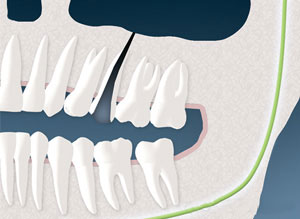
Opening to Sinus
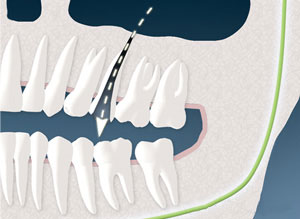
Air Communication From Sinus
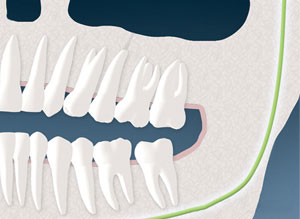
Sinus Communication Corrected
If you have any questions, please call our office at Amarillo Endodontics & Periodontics Phone Number806.354.2424 or 1.800.594.ENDO (3636).
Since dental emergencies can occur at any time, the doctors of Amarillo Endodontics & Periodontics can be contacted after hours and on weekends.
To reach us after normal office hours (8:00 am to 5:00 pm), call 806.354.2424 and leave a message. The doctor on call will call you back to discuss your concerns. If you break a tooth or develop a toothache during our office hours, call us and we will arrange to see you the same day.
For after hours emergencies please have your pharmacy phone number available when speaking to the doctor on call.